"Deep state" is one of the most loaded phrases in modern political conversation. Used loosely, it can mean anything from "the government I don't like" to a literal cabal. Used precisely, it points to something more specific: the persistent, mostly-unelected institutional power that shapes policy across administrations, regardless of which party is in office. Whether you believe it's a vast coordinated network or a structural inevitability of complex bureaucracies, understanding what people actually mean by it matters.
The institutional version
The most defensible definition of the deep state describes a network of long-tenured officials in intelligence, military, finance, and regulatory agencies who outlast elected officials. Career CIA, NSA, State Department, Federal Reserve staff don't change with elections. They form a continuity layer that constrains what any new president can actually do. This version of the deep state is well-documented and acknowledged across the political spectrum — though people disagree about whether it's a feature or a flaw.
The coordinated version
The fuller awakening-community version goes further: that this network coordinates with private banking interests, intelligence-linked media, pharmaceutical and energy conglomerates, and a handful of multi-generational family lineages to shape policy at a level beneath public visibility. Names that come up include the global elite networks, the Bilderberg group, the Trilateral Commission, and various banking dynasties. Documenting this is harder. The pattern is suggestive; definitive proof for the strongest version is contested.
Why it matters either way
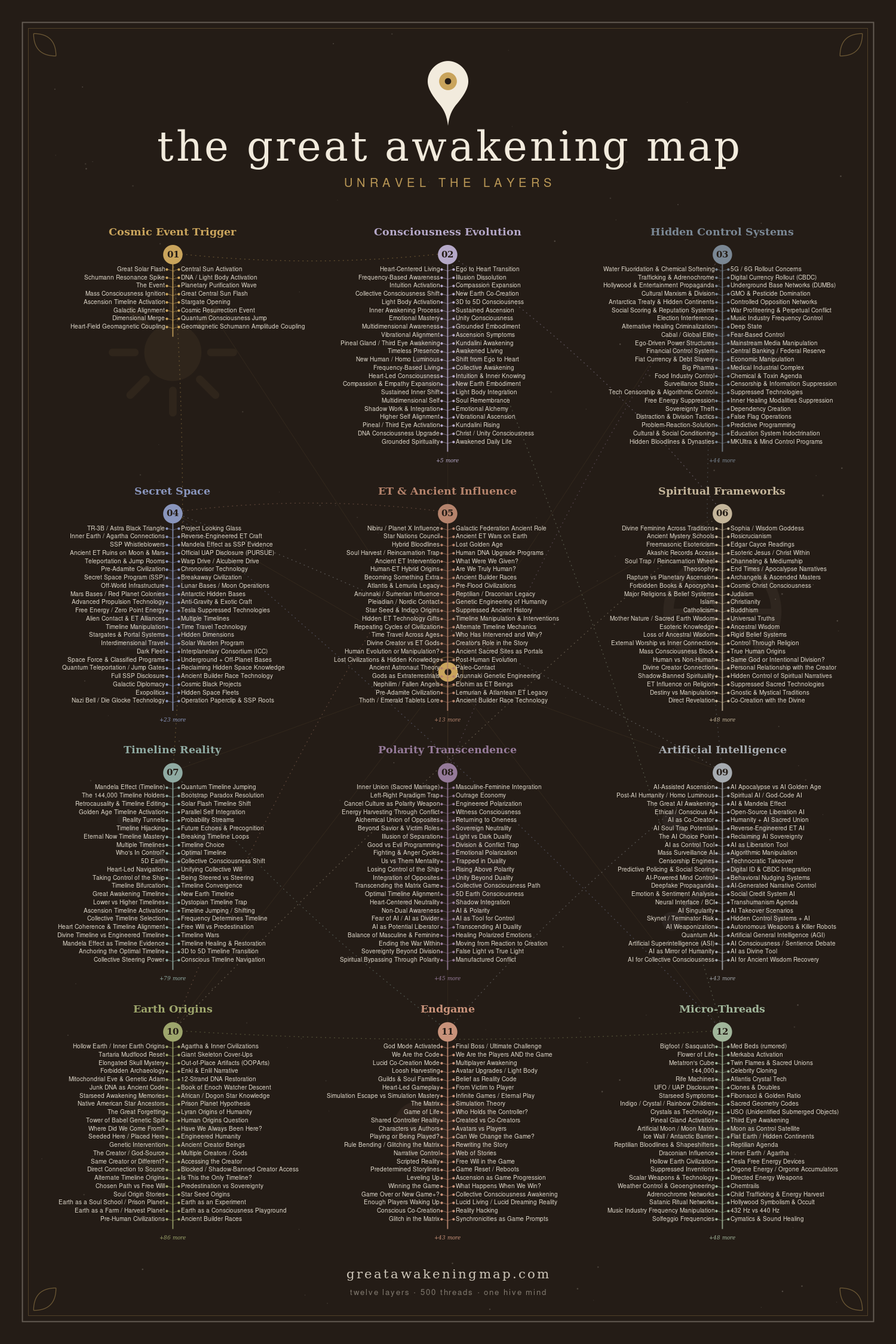
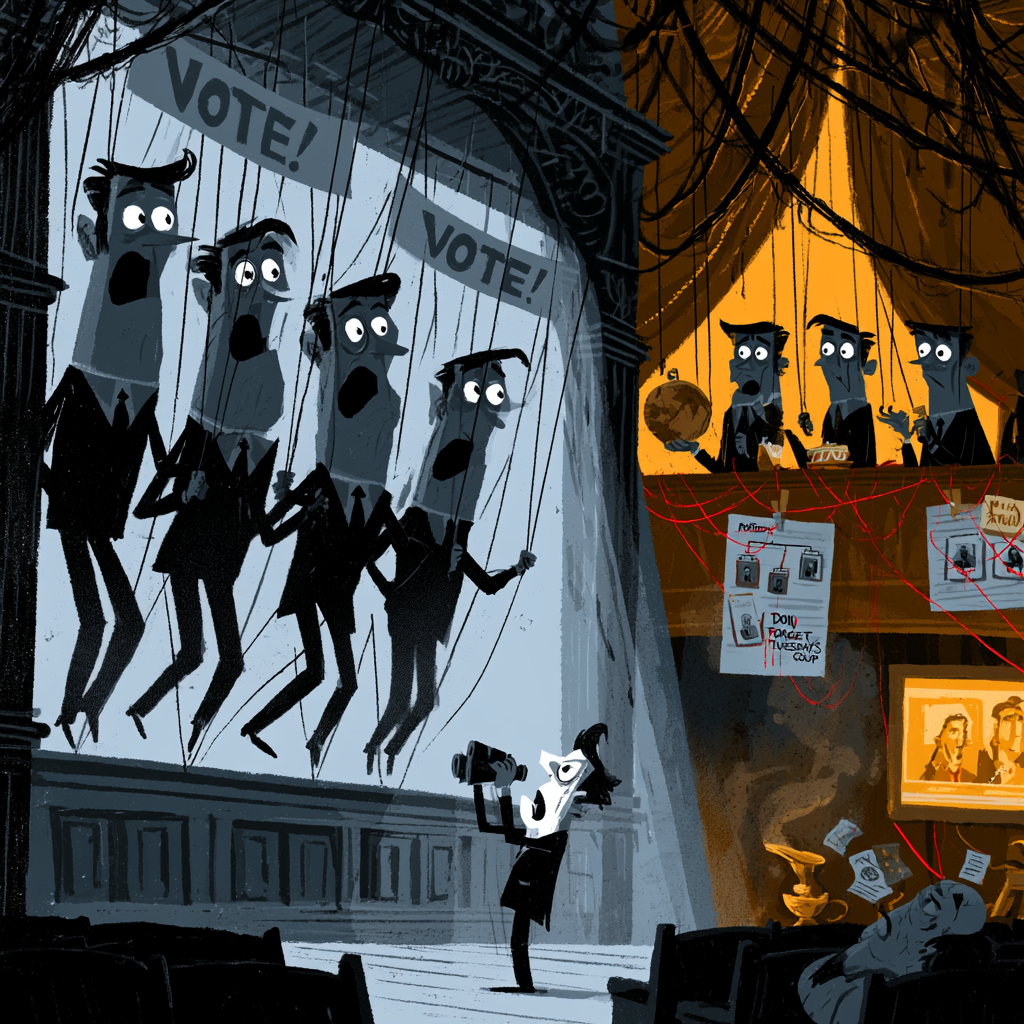
You don't need to commit to the maximalist version to take the concept seriously. The institutional version alone explains why policy doesn't change much across administrations, why whistleblowers get crushed, and why certain industries (pharma, banking, weapons) are functionally immune from accountability. The fuller version explains the rest. Both versions point to the same conclusion: the visible government is not where the meaningful decisions get made. The map's Hidden Control Systems layer goes deeper into the architecture.
The phrase "deep state" has been weaponized by both sides of the political spectrum, which makes it harder to think clearly about. The work is to look past the rhetoric and ask: where do the actual decisions get made, and by whom? Whatever answer you arrive at, the question is worth holding.