
If a plant is safer than alcohol by most measures, and a clear majority of Americans want it legal, why is weed still illegal at the federal level — and why did Texas just turn products people were buying at the gas station into felonies? The explanation you hear most often is that the alcohol and pharmaceutical industries are protecting revenue from a product that takes customers away from both. That explanation is partly right, partly wrong, and the parts that are documented are stranger and more specific than the rumor. This piece separates the three tiers: what is on the record, what is real but ambiguous, and what is inference doing work that evidence has not done yet. It is the companion to our piece on who made weed illegal in the first place.
What Texas actually banned — and what it didn’t
Start here, because the details are widely misreported and they change the shape of the argument.
CBD is still legal in Texas. So are CBG and other non-intoxicating hemp cannabinoids. The gummies in the medicine cabinet that were genuinely just CBD did not become contraband. What changed is a category most shoppers never distinguished from CBD because the packaging rarely did either.
As of July 31, 2026, Texas treats delta-8, delta-10, delta-6, THC-O, HHC, THCP, and THCa flower and pre-rolls as Schedule I controlled substances. Penalties are not symbolic: possessing under a gram of concentrated THC oil is a state jail felony carrying 180 days to two years and a fine up to $10,000, with 1–4 grams a third-degree felony and 4–400 grams a second-degree felony. Hemp-derived delta-9 products that stay at or under the 0.3% total-THC threshold — gummies, seltzers, tinctures, topicals — remain legal for adults 21 and over.
The mechanism matters more than the substance, and this is the part almost nobody reports. The Texas ban did not come from the legislature. Lieutenant Governor Dan Patrick drove Senate Bill 3 through in 2025, and Governor Abbott vetoed it in June 2025. The ban arrived anyway, by a different road: Abbott’s Executive Order GA-56 in September 2025 directed the Department of State Health Services to calculate “total THC” using heat-conversion factors, counting THCa toward the threshold. In May 2026 the Texas Supreme Court sided with DSHS in Hometown Hero v. DSHS. The agency published the reinstated definitions in the Texas Register on July 10, 2026, and enforcement began at the end of that month.
An elected legislature passed a ban, an elected governor vetoed it, and an unelected agency produced substantially the same result through a definitional change eleven months later. If that structure feels familiar, it should — it is the 1937 Marihuana Tax Act pattern almost exactly: the prohibition arrives through administrative machinery rather than a vote, which is precisely what makes it durable and hard to contest.
Follow the money: what the Texas record actually shows
Here the lobby thesis gets its strongest Texas-specific footing, and it is worth stating precisely rather than loosely.
Texas Ethics Commission filings show that on April 12, 2024, John Nau — CEO of Silver Eagle Distributors, one of the largest Anheuser-Busch distributors in the country — gave $250,000 to Dan Patrick. On December 2, 2024, the Beer Alliance of Texas PAC gave $25,000 to Texans for Dan Patrick. These are public filings, not rumor.
What they are not is proof of causation. No quid pro quo has been documented, and Patrick has consistently given a different reason. His stated case was child safety and an unregulated loophole: “I couldn’t, in good conscience, leave here knowing if we don’t do something about it in the next two years — how many kids get sick?” He argued regulation would demand an impossible amount of enforcement manpower.
Notably, the sharpest version of the lobby accusation came from his own side. The push drew unusual backlash from Texas conservatives, who called it a nanny-state overreach, argued it would hand the market back to cartels, and used the phrase “booze lobby shill” directly. Radio host Dana Loesch: “This is stupid. It’s like the gun ban argument with a different variable.” A State Republican Executive Committee member called the press conference “bizarre and counterproductive.” This is not a partisan talking point; it is a criticism that crossed the aisle in both directions.
So the honest formulation is: the contributions are documented, the timing is suggestive, and the causal link is inference. That is a real finding. It is not the same finding as proof, and treating it as proof is how a strong argument gets discarded by the people you most need to persuade.
The pharma case, where the motive is in writing
If you want the single most damning documented example in this whole domain, it is not in Texas and it is not about alcohol. It is Insys Therapeutics.
On August 31, 2016, Insys donated $500,000 to Arizonans for Responsible Drug Policy, the leading group fighting Proposition 205, Arizona’s legalization measure. Insys manufactured Subsys, a sublingual fentanyl spray, and was simultaneously developing a synthetic THC product — dronabinol oral solution.
What makes this case different from every “follow the money” argument is that the motive was not inferred by activists. Insys wrote it into an SEC filing: “Legalization of marijuana or non-synthetic cannabinoids in the United States could significantly limit the commercial success of any dronabinol product candidate.” And further: “If marijuana or non-synthetic cannabinoids were legalized in the United States, the market for dronabinol product sales would likely be significantly reduced and our ability to generate revenue and our business prospects would be materially adversely affected.”
A fentanyl manufacturer spent half a million dollars to keep a plant illegal while telling its investors, in a legally binding disclosure, that legal cannabis would hurt its synthetic-THC business. The company later collapsed: executives pleaded guilty in a kickback scheme built around paying doctors speaking fees to prescribe Subsys.
One example is not an industry. But it establishes something important — that the incentive people suspect is not hypothetical, and that when a company is legally required to describe its risks honestly, this is what it says.
What the alcohol industry actually lobbies on
Federal lobbying disclosures from 2025 show a long roster of alcohol interests registered on hemp and cannabis: Anheuser-Busch, Molson Coors, Diageo North America, Bacardi North America, Moët Hennessy USA, the Beer Institute, the Distilled Spirits Council, the National Beer Wholesalers Association, the Wine & Spirits Wholesalers of America, the Wine Institute, and Altria Client Services. Registered topics include “regulation of hemp-derived THC products generally,” “beverage regulations pertaining to intoxicating hemp,” and “differentiation of beer from cannabis and hemp in tax and regulation.” Pharmaceutical firms appear too — Jazz Pharmaceuticals registered on FDA regulation of CBD and cannabis-derived therapies.
Now the caveat that most retellings drop, and it is not a small one. Lobbying disclosures record the topic, not the position. They do not say whether a company lobbied for a ban, against one, or for a regulatory carve-out that favors it. The National Beer Wholesalers Association’s registered topic was “legal banking and effective regulation for cannabis products” — which reads considerably more like wanting a regulated market than wanting prohibition.
“Eleven alcohol groups lobbied Congress on THC” is true and worth knowing. “Eleven alcohol groups lobbied to ban THC” is a claim the disclosures do not support, and anyone can check.
The complication: alcohol is also buying in
The simple version of the theory — that the alcohol industry wants cannabis illegal — has to account for the fact that large parts of the alcohol industry have been trying to get into cannabis for years. Constellation Brands, which owns Corona and Modelo in the U.S., put billions into Canopy Growth. Anheuser-Busch InBev has explored cannabis beverages. Tilray, a cannabis company, bought craft breweries from Molson Coors, running the trade in the opposite direction.
That does not dissolve the concern. It sharpens it into something more precise and, honestly, more consistent with how incumbents behave. The behavior that fits the evidence is not keep it illegal forever. It is keep it out of the channel until we own the channel — support the rules that route intoxicating products through licensed distributors, age gates, tax structures, and shelf space that established players already control, and oppose the unregulated gas-station version that competes without any of that overhead. That is regulatory capture, not prohibition, and it explains both the lobbying and the acquisitions at once.
It is also worth reporting the denial. Smart Approaches to Marijuana, the most prominent organized opponent of legalization, states plainly on its funding page: “We receive NO funding from the alcohol, tobacco, opioid, or prison industry.” Readers can weigh that as they like; leaving it out would be dishonest.
Is the threat to alcohol real? The data says yes
This is the part of the intuition that holds up best, and it has gotten much stronger very recently.
Gallup’s July 2026 consumption survey found that 54% of American adults drink alcohol — tying the record low set in 2025 and the lowest figure since Gallup began asking in 1939. The decline shows up across every age group. Gallup’s director of social research put it plainly: “whatever is happening out there is a sustained change.” The survey points to rising health awareness as a major driver — 54% now call alcohol bad for health, against roughly 30% a decade ago — alongside GLP-1 medications and prices.
On direct substitution, a 2026 University at Buffalo study published in the Journal of Psychoactive Drugs surveyed 438 adults who had used cannabis in the past year. Among those using cannabis beverages, average weekly alcoholic drinks fell from 7.02 to 3.35. Nearly 63% reduced or stopped drinking after starting cannabis beverages, and 58.6% of beverage users reported substituting cannabis for alcohol, compared with 47.2% among users of other cannabis products.
Two honest qualifications. The Buffalo study is self-reported survey data, described by its own authors as the first of its kind and preliminary. And Gallup itself declines to claim causation — “we don’t know if it’s a substitution, but that’s a question we need to answer.” The drinking decline is overdetermined; health messaging and GLP-1 drugs are doing real work in it.
But for the question at hand, causation barely matters. What matters is whether the alcohol industry has a rational reason to be worried, and it plainly does. You do not need to prove cannabis caused the decline to understand why a beer distributor would rather the competing product be sold through his warehouse than a smoke shop — or not sold at all.
The boring machinery that actually keeps it illegal
Lobbying is a live force, but it is not the load-bearing wall. Three unglamorous structures do most of the work.
Section 280E. Enacted in 1982 after a tax-court ruling let a convicted trafficker deduct business expenses, it bars anyone “trafficking in controlled substances” from deducting ordinary business costs. Cannabis retailers therefore pay tax on gross rather than net income, producing effective rates that routinely run 70% or higher against a 21% corporate rate. No lobbyist has to lift a finger; the tax code strangles the industry automatically for as long as Schedule I status holds.
Schedule I itself. As covered in the companion piece, the April 23, 2026 action moved FDA-approved marijuana products and state-licensed medical marijuana to Schedule III, but marijuana broadly remains Schedule I pending an expedited hearing that opened June 29, 2026.
The federal hemp redefinition. Legislation signed in late 2025 redefines hemp to permit only 0.4 milligrams of total THC per container — a standard that would eliminate essentially the entire hemp-THC beverage and edible market that grew out of the 2018 Farm Bill’s 0.3%-by-dry-weight language. It was set for November 12, 2026. On August 8, 2026 the Senate voted 61–32 to table an amendment that would have held that date, then passed the underlying spending bill 90–6, pushing the ban to December 11, 2026 — a delay the White House pushed for, with industry groups, alcohol retailers, and the restaurant association supporting it. A carve-out still recriminalizes synthetic cannabinoids “not capable of being naturally produced by a Cannabis sativa L. plant” on the original November date.
Read that last one closely, because it cuts against the simple story: alcohol retailers lobbied to delay the THC ban. Not everyone in that industry is pulling the same direction.
How to hold this honestly
Sort the claims into three tiers and the picture gets clearer, not weaker.
Documented and specific: the Insys $500,000 donation and its SEC risk language; the $250,000 and $25,000 contributions to Dan Patrick from beer-distribution interests; the roster of alcohol and pharma entities registered to lobby on hemp and cannabis; 280E’s punitive tax math; the Texas ban arriving by agency rulemaking after a gubernatorial veto.
Real but ambiguous: what those lobbyists actually asked for; whether the drinking decline is cannabis substitution or health messaging or GLP-1s; whether contributions shaped Patrick’s position or merely accompanied it.
Inference, not evidence: that the alcohol and pharmaceutical industries jointly keep cannabis illegal nationally. There is no document establishing that, and the sector’s own investments cut against it.
The synthesis the record supports is less cinematic and more useful: incumbents do not need to conspire to protect a channel — they need only to be present when the rules get written, and they always are. Combine that with a tax code that punishes automatically, an agency that can redefine a molecule without a vote, and a legislature content to let both happen, and you get the current situation without anyone holding a secret meeting.
How this fits the awakening map
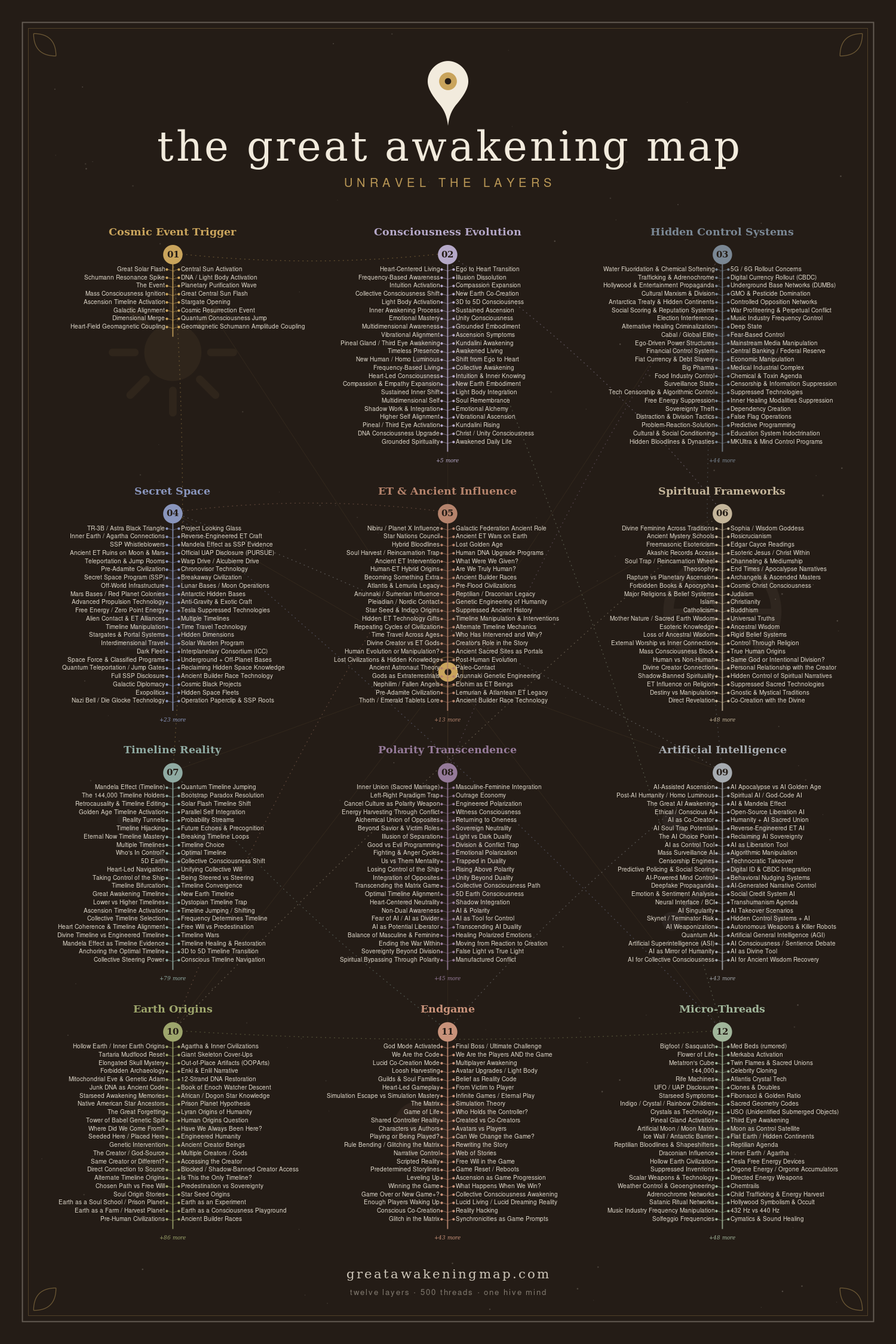
This belongs to Layer 03 — Hidden Control Systems — and it pairs with the historical piece as a single lesson in two halves. In 1937 the mechanism was a bureau that needed a mission and a press that needed a villain. In 2026 it is economic manipulation through tax code and definitional rulemaking, with pharmaceutical and beverage incumbents positioned near the pen. The plant did not change. The instruments did.
The thread that runs through both is sovereignty theft — not as slogan but as procedure. A Texan who bought a legal product in July committed a felony by buying the same product in August, and no one they voted for cast a ballot on it. That is the same structure as the suppression of inner healing modalities generally: the question of what you may put in your own body settled somewhere you cannot reach. For the therapeutic and plant-medicine side of this thread rather than the legal one, our sibling site The Healing Almanac carries it.
And the discipline point from the companion piece applies here too, in reverse. There we had to let go of a beloved story — the Hearst hemp-paper conspiracy — because the record did not support it. Here the record supports considerably more than skeptics assume: a fentanyl maker really did buy an election campaign to protect a synthetic-THC pipeline, and wrote down why. Follow the evidence in both directions or you are not following it at all.
So why is weed still illegal? Not because of one cartel of interests, and not because the evidence ever justified it. It stays illegal because the machinery of prohibition was built to run without supervision — a schedule that persists by default, a tax provision that punishes without enforcement, and agencies that can redraw a definition faster than a legislature can debate one. Industry money is real and in places documented, but it is a hand on a lever that was already there. The lever is the thing to watch. And in Texas this summer, it moved without a single vote being cast.