Inner child healing is the practice of tending the younger part of you that carries your earliest emotional wounds — the part that learned, long before you had words for it, what love cost, what safety required, and what you had to hide to belong. That younger self doesn't disappear as you age. It lives on inside the adult as a set of reflexes: the flare of panic when someone pulls away, the collapse into people-pleasing, the old belief that you're only worth what you provide. This piece is a plain, practical guide to healing your inner child — what it means, what wounds it addresses, exactly how to do it, and why this quiet, tender work turns out to be one of the most direct doorways into awakening.
What the inner child actually is
The "inner child" isn't a literal being living in your chest, and you don't have to believe in anything metaphysical to work with it. It's a useful name for the emotional patterns, memories, and unmet needs formed in your earliest years — the template your nervous system built when it was small and still learning whether the world was safe. When those early needs were met consistently, the template is largely secure. When they weren't — through neglect, criticism, chaos, loss, or wounds too early to remember — the child adapts by forming protective strategies. Those strategies made sense then. The trouble is they're still running now, in an adult life they no longer fit.
So when a small slight produces a flood of shame, or a partner's ordinary distance triggers abandonment terror, that's usually not the adult reacting. It's the child's old wound firing through a grown body. Inner child healing emotional wounds means going back to that younger part with the resources the adult now has, and finishing what got interrupted.
The wounds it addresses
Most inner child work circles a recognizable set of core wounds, each with its own adult signature:
The abandonment wound — a deep fear of being left, showing up as clinginess, anxiety in relationships, or pushing people away before they can leave first.
The neglect wound — a sense that your needs don't matter, producing chronic self-neglect, difficulty asking for help, or not even knowing what you feel.
The shame or "not enough" wound — the buried belief that something is fundamentally wrong with you, driving perfectionism, harsh self-criticism, and a hunger for approval that never fills up.
The safety or trust wound — from chaos or unpredictability, showing as hypervigilance, control, and a body that can't quite relax even when nothing's wrong.
The guilt wound — an early sense of being responsible for others' feelings, becoming the adult who over-apologizes and can't hold a boundary.
Naming your particular wound isn't about assigning blame to the people who raised you. It's diagnostic: you can only reparent a wound you've actually located.
How to heal your inner child
Here is the practical core — how to heal your inner child, step by workable step. None of it requires special talent, only willingness and repetition.
1. Notice the trigger. The doorway is almost always a disproportionate reaction — a feeling too big for the actual event. When your response is out of scale, pause and recognize: this is probably the child, not the adult. That recognition alone loosens the reaction's grip.
2. Turn toward the feeling instead of away. The instinct is to suppress, distract, or numb. Healing runs the other direction — toward the feeling, with curiosity. Where is it in the body? How old does it feel? What is it afraid of? You're making contact with the part, not fixing it yet.
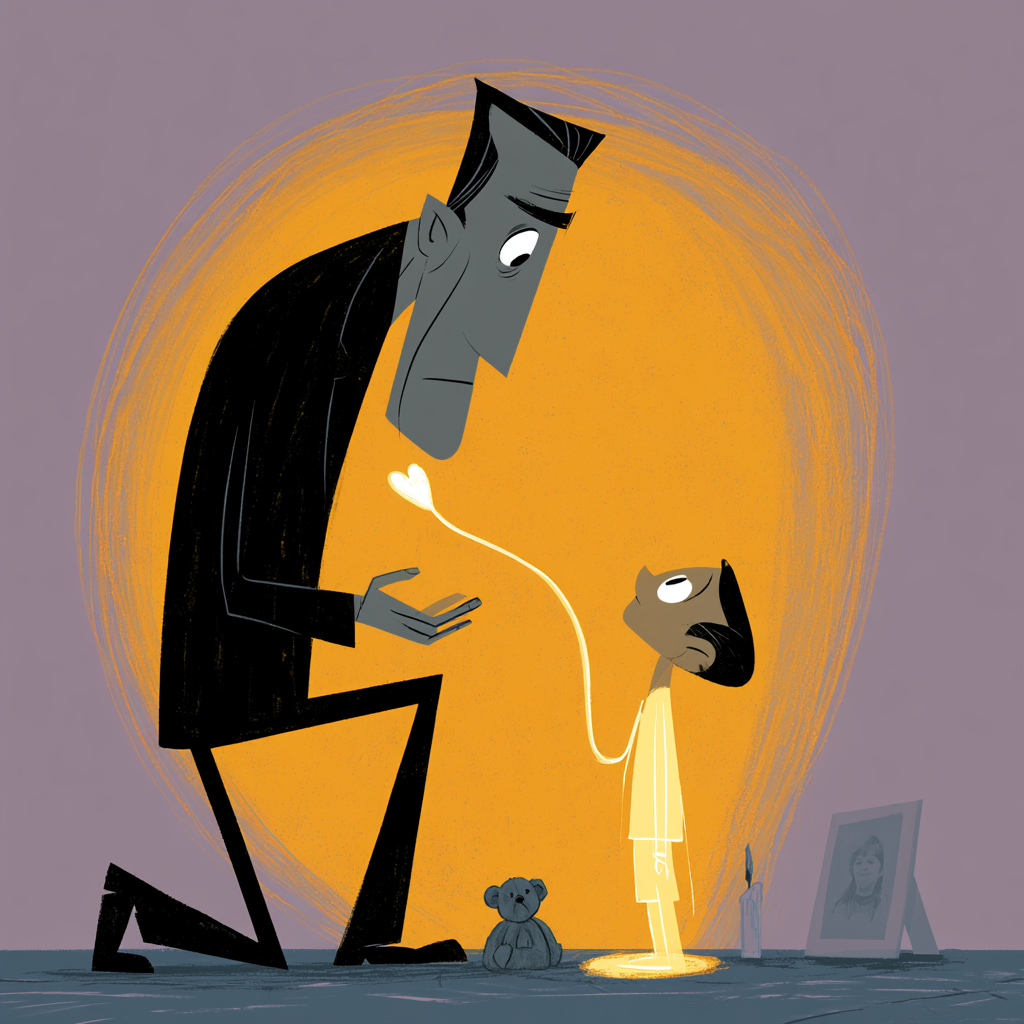
3. Reparent — give it what it needed. This is the heart of the work. Speak to the younger self the way a steady, loving adult would have: You're safe now. It wasn't your fault. I'm not going anywhere. You don't have to earn it. It can feel awkward at first and still work. You are supplying, from the inside, the reassurance that was missing on the outside.
4. Use tools that make contact concrete. Journaling with your non-dominant hand to "let the child speak," writing a letter to your younger self, looking at a childhood photo while offering it compassion, guided visualizations, and inner-dialogue work all give the abstract something to hold. Somatic practices matter too — this is stored in the body, not just the mind, and calming the nervous system is part of the healing. The body-based side of that work is exactly what Jennifer's sister site The Healing Almanac is built around.
5. Repeat, and be patient. A wound built over years of childhood doesn't close in one cathartic session. Healing is the slow accumulation of a new, corrective experience: again and again, the frightened part reaches out and this time is met. That repetition is what rewires the template.
When to do this with support
A real caution belongs here. Inner child work can surface deep, painful material, and for wounds rooted in trauma, doing it alone can be overwhelming rather than healing. If the memories are severe, if reaching toward them destabilizes you, or if you find yourself flooded and unable to come back to steadiness, this is work to do with a trained therapist — ideally one who works with trauma, attachment, or modalities like IFS (Internal Family Systems). Needing a guide isn't weakness or a detour from the path. For the deepest wounds it is the path, and going gently with help is far wiser than forcing depth alone.
Why the "child" and "adult" framing works
The reason this metaphor is so effective is that it separates the wounded part from the whole of you. You are not your abandonment fear; you are the adult who has an abandonment fear and can now turn toward it with compassion. That small shift — from being the wound to holding it — is the same move at the center of nearly all inner work. It's the same skill as watching a panic without becoming it, which is how people describe contact with the higher self: a calm, adult vantage point that can hold the frightened part without being run by it. In that sense the "adult" who does the reparenting and the "higher self" are pointing at the same steady center.
How inner child healing fits the awakening map
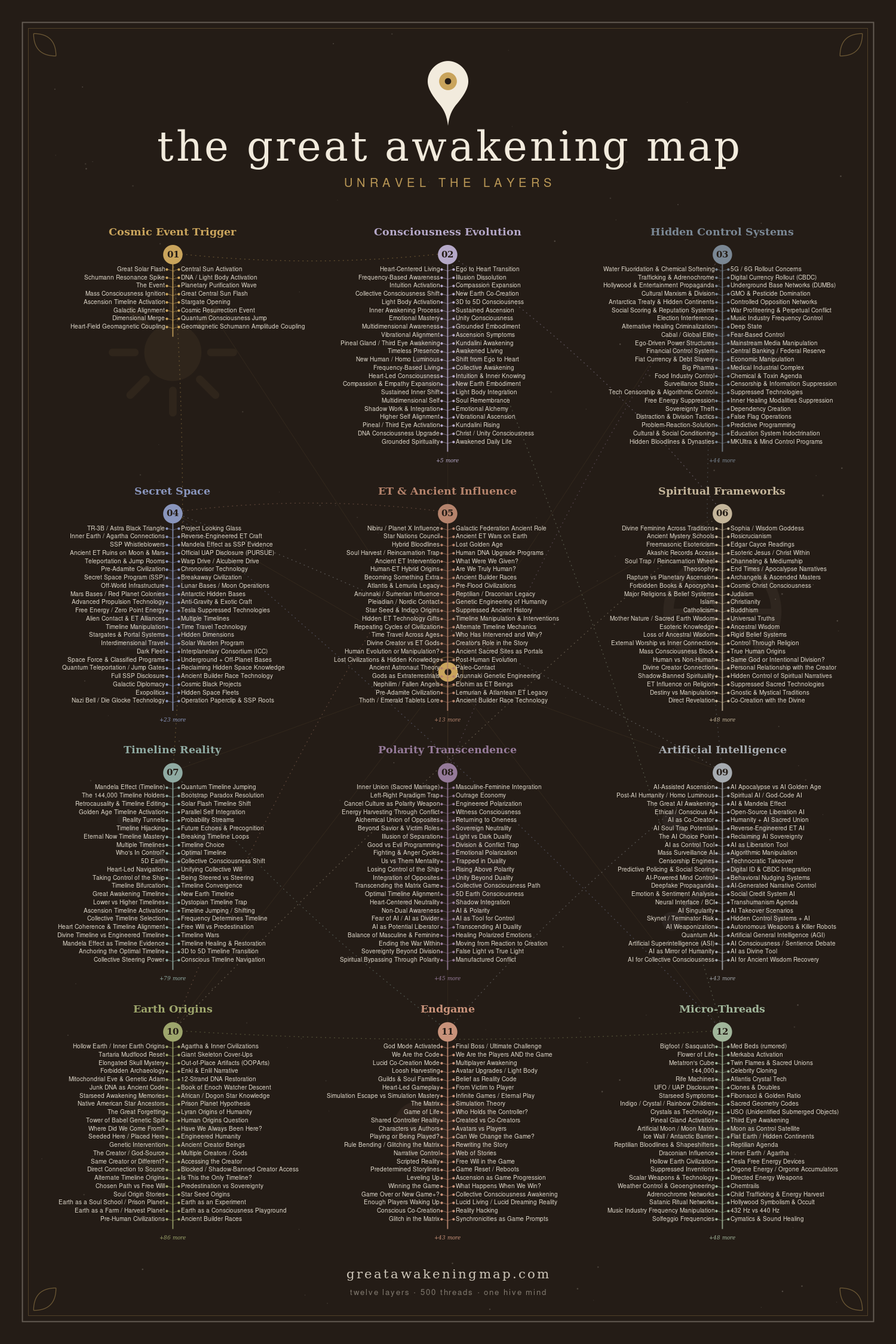
It's tempting to treat inner child healing as mere psychology and awakening as something loftier — but on the map they're the same movement seen at two scales. Layer 02, Consciousness Evolution, describes the shift from a smaller, fear-bound self toward a larger, freer one. The fear-bound self is, in large part, the unhealed child — the accumulated protective patterns that keep running old survival programs. This is why so much awakening stalls without this work: people chase transcendent states while the wounded child keeps quietly steering the car. You can't bypass the child on the way up. The loosening of the ego's grip that awakening asks for is, in practice, largely the healing of these early wounds, so the protective patterns no longer have to run the show.
Read alongside the symptoms of a spiritual awakening and the 5D shift, inner child healing is the grounded, unglamorous engine underneath the whole layer — the part of awakening that looks less like light and more like a grown person gently going back for the kid who got left behind.
If you recognized your own patterns in the wounds above, take it as an invitation rather than a verdict. The child inside you was never broken — it adapted, brilliantly, to survive what it faced, and those adaptations simply outlived their usefulness. Healing isn't about erasing your history or blaming anyone for it. It's about becoming, at last, the steady adult that younger part was always waiting for — and discovering that the person best suited to give it what it needed was you, all along.