Shadow work is the practice of turning toward the parts of yourself you've hidden, denied, or disowned — and integrating them instead of continuing to run from them. The "shadow" is a term from the psychology of Carl Jung: the collection of traits, impulses, and feelings a person pushes out of conscious awareness because, somewhere along the way, they learned those parts were unacceptable. This piece covers what shadow work is, where the idea comes from, why the awakening path can't skip it, the signs you're being called to it, and how to start — including prompts you can use tonight.
What the shadow actually is
The shadow self is not a demon and not a synonym for "the bad parts of you." It's simply everything about yourself that you've kept out of the light of awareness — usually not because it's evil, but because at some point it was dangerous to show. The child who learned that anger got them punished exiles their anger. The child who learned that needing things got them abandoned exiles their neediness. The traits don't disappear; they go underground and keep running, unseen, from below.
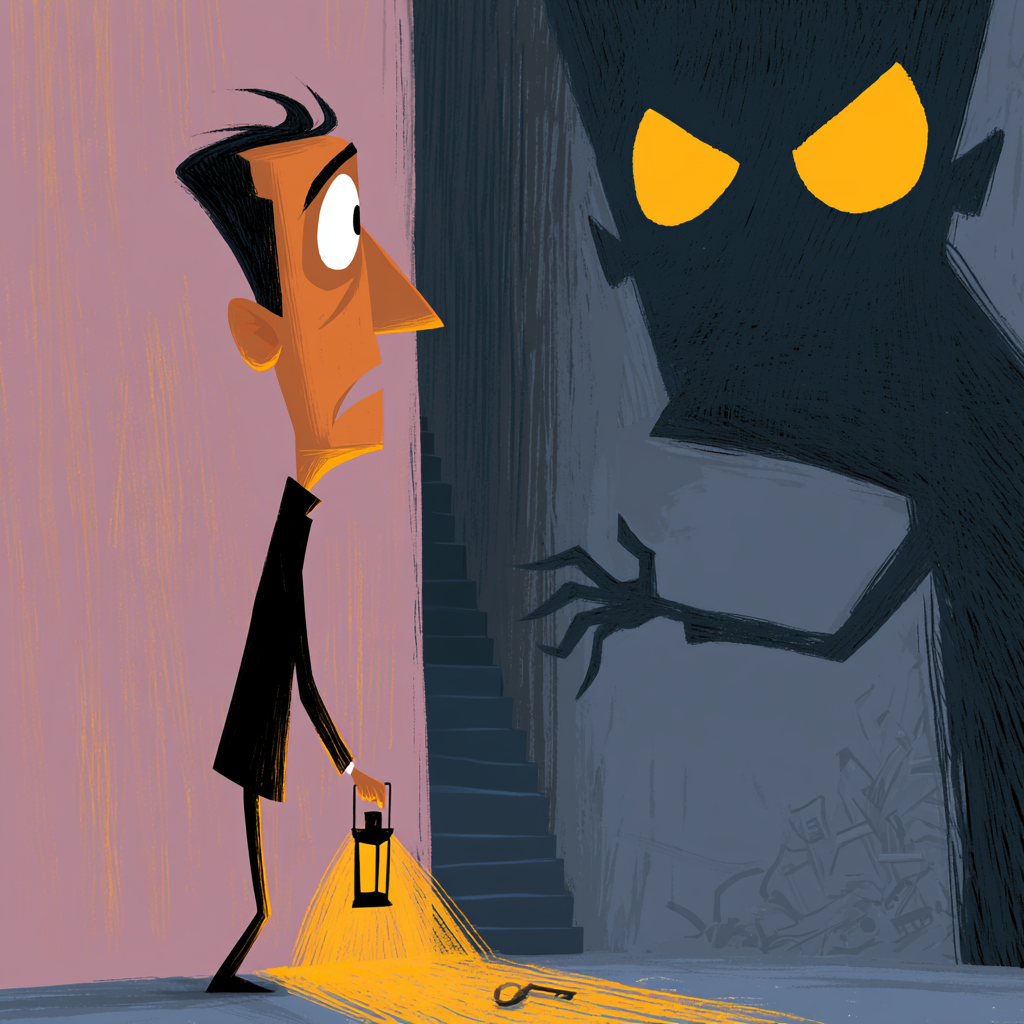
Crucially, the shadow holds more than the "negative." People bury their brilliance, their power, their desire, and their creativity just as often as their rage — the "golden shadow," the greatness that felt unsafe to own. Shadow work is the process of going back down to the basement with a lantern and meeting what's there: not to indulge it and not to exorcise it, but to bring it back into the whole.
Where the idea comes from
The framework is Jung's. Carl Jung proposed that the psyche keeps an unconscious counterpart to the conscious personality — the shadow — and that psychological wholeness ("individuation") requires making the unconscious conscious, meeting the shadow rather than projecting it onto others. His often-quoted line sets the stakes: "Until you make the unconscious conscious, it will direct your life and you will call it fate." The older layer beneath the psychology is spiritual and mythic — every hero's descent into the underworld, every night-sea journey, every tradition that says you have to go down before you can rise. Modern shadow work is that ancient descent, given a psychological vocabulary and a journal.
Why the awakening path runs through the shadow
This is where shadow work stops being generic self-help and becomes specific to the awakening. A great deal of spiritual culture sells ascent — higher vibrations, love and light, rising above the heavy emotions. But bypassing the shadow doesn't transcend it; it buries it under spiritual language, a pattern often called "spiritual bypassing." The disowned material keeps leaking out sideways: in the guru who preaches unconditional love and controls everyone around him, in the seeker whose "high vibration" can't survive a traffic jam. You cannot rise cleanly past what you refuse to look at — it comes with you, wearing a robe.
This is the same terrain as ego death and the inner child healing work: all three describe the descent side of awakening, the part where growth looks like turning toward pain rather than away from it. Many of the disorienting symptoms of a spiritual awakening — the sudden grief, the old memories surfacing, the sense that something buried is being dredged up — are shadow material coming to the surface to be integrated. The awakening doesn't route around the shadow; the shadow is part of the route.
Signs you're being called to shadow work
Certain patterns are the shadow announcing itself. Strong triggers — reactions far bigger than the moment warrants — are the classic tell; the size of the charge points to buried material. Projection is another: the trait that most enrages you in other people is very often the one you've exiled in yourself. So are repeating relationship patterns, the same dynamic with new faces; a harsh inner critic; chronic people-pleasing; and the quiet sense that a whole part of you is missing or performing. None of these mean something is wrong with you. They mean something in you is asking to be met.
How to start shadow work
The practice is simpler than it sounds, and journaling is the most common on-ramp. A workable approach: when something triggers you disproportionately, pause and follow it inward instead of outward — what does this remind me of, how old does this feeling feel, what am I afraid is true about me here. The two non-negotiables are honesty and self-compassion. Shadow work done as self-attack just recruits the inner critic to a new job; the whole point is to meet what you find the way you'd meet a frightened child — with curiosity, not a verdict.
A few starting shadow work prompts:
· What trait in other people am I quickest to judge — and where does it live in me?
· What did I have to hide or shut down as a child to stay safe and loved?
· When was I last disproportionately triggered? What was the feeling underneath the reaction?
· What am I most afraid people would think if they saw the real me?
· What good quality — power, desire, talent — do I downplay because owning it feels unsafe?
A grounding note: shadow work can surface heavy material, and it isn't a replacement for professional support. If what comes up feels like more than journaling can hold — trauma, persistent despair — that's not a failure of the practice; it's a sign to do this work alongside a good therapist rather than alone.
What integration actually looks like
The goal of shadow work isn't to eliminate the shadow — you can't, and the attempt just makes a new shadow out of the effort. The goal is integration: bringing the exiled parts back into conscious relationship so they stop running the show from underneath. Integrated anger becomes healthy boundaries. Integrated neediness becomes the capacity to ask for what you want. Integrated "golden shadow" becomes permission to be as capable as you actually are. You don't become someone without a dark side; you become someone who knows their whole self and is no longer secretly governed by the parts they refused to see. That reconciliation is also how the shadow hands you back the thread to your higher self — because the clearer you are with what's below, the cleaner the line runs to what's above.
How shadow work fits the awakening map
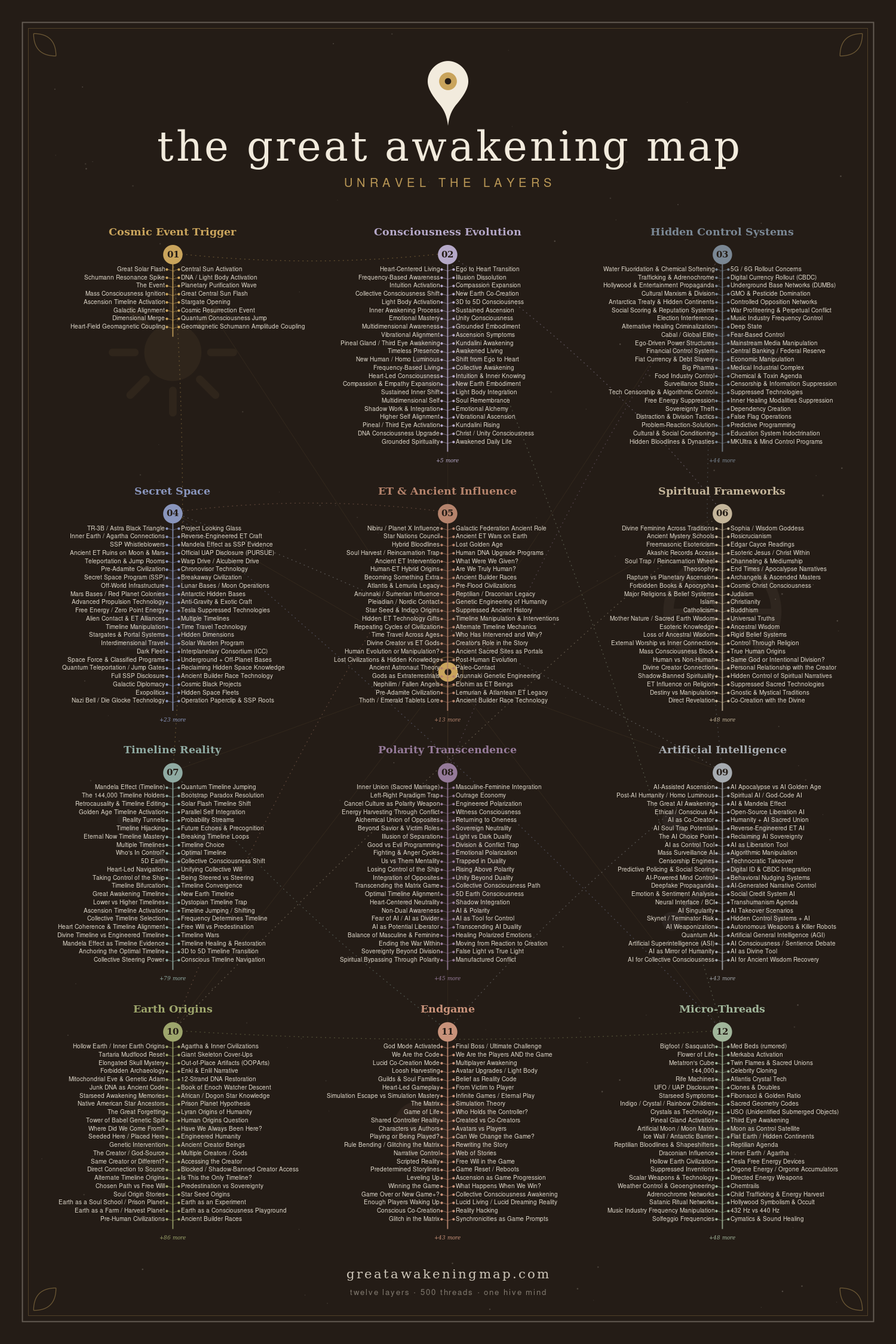
Shadow work sits in Layer 02 — Consciousness Evolution — the layer that tracks how a human being actually grows in awareness. It belongs there because it names the part of the climb that the love-and-light version of spirituality most wants to skip, and that the map insists on keeping in frame: real evolution of consciousness includes the descent, not just the ascent. Integration, not purification, is the movement the whole layer describes.
There's a larger echo, too. The pattern of a disowned "dark half" that keeps running things from the shadows isn't only personal — it's the same shape the map traces in its hidden control systems layer at the scale of the world. Doing your own shadow work is, in that light, a small version of the same work the whole awakening is about: bringing what was hidden into the light so it can no longer quietly run the show.
Shadow work asks for the one thing most spiritual shortcuts are designed to avoid: turning around and looking at what you left in the dark. The promise on the other side isn't that the shadow vanishes, but that it stops running your life from a place you can't see. You meet the anger, the need, the buried brilliance — not to indulge them and not to kill them, but to bring them home. That's the quiet paradox at the center of the whole path: the way up really does go through the basement, and the parts of you that you were most afraid to face turn out to be exactly the parts you were missing.